Hatches Matches and Dispatches part 4

Dear blog reader

This is the fourth part in a series of Shandon hatches, matches and dispatches that have appeared in the newspapers.

I always find such finds very exciting in my own 30 years of family history research and I hope this helps anyone doing similar Shandon-based research.

(Glossary: inst/instant means of the present month, relict means widow, ult/ultimo means of last month)

******************************************

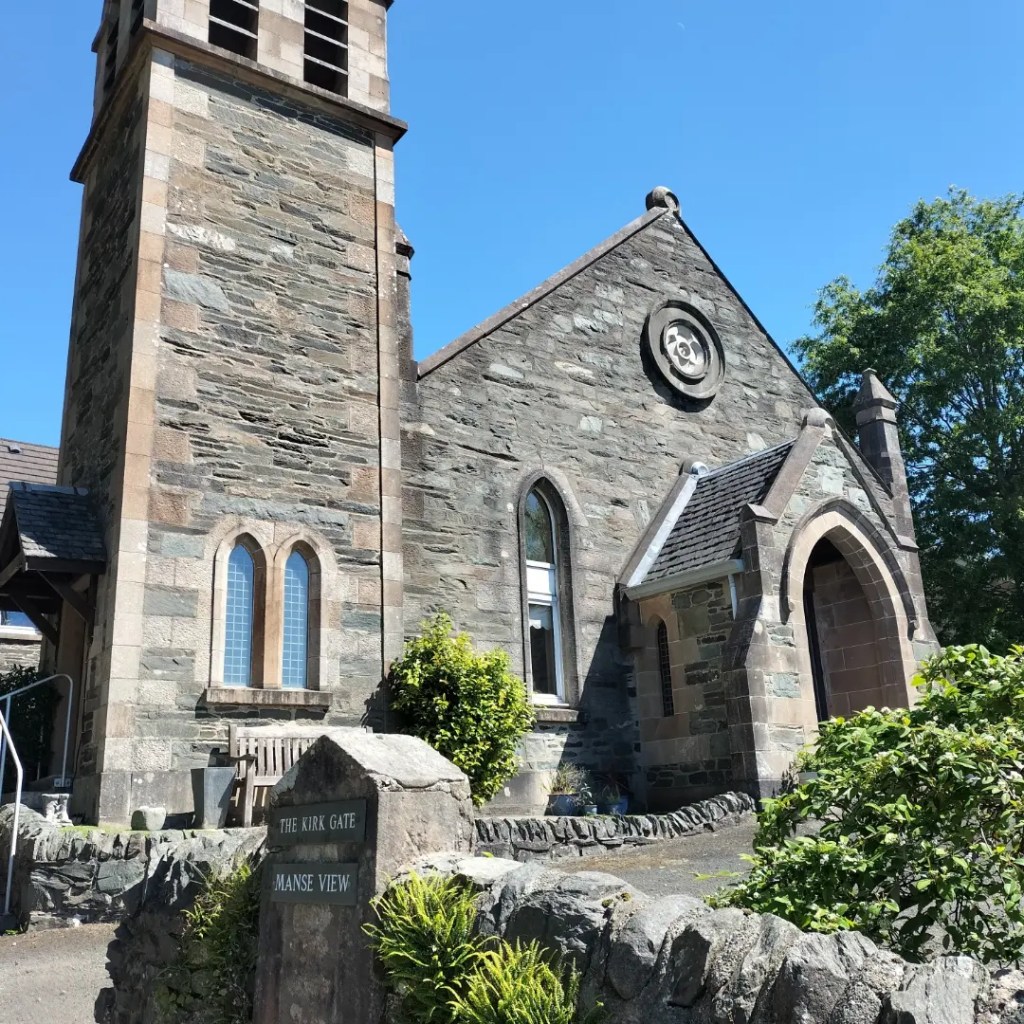
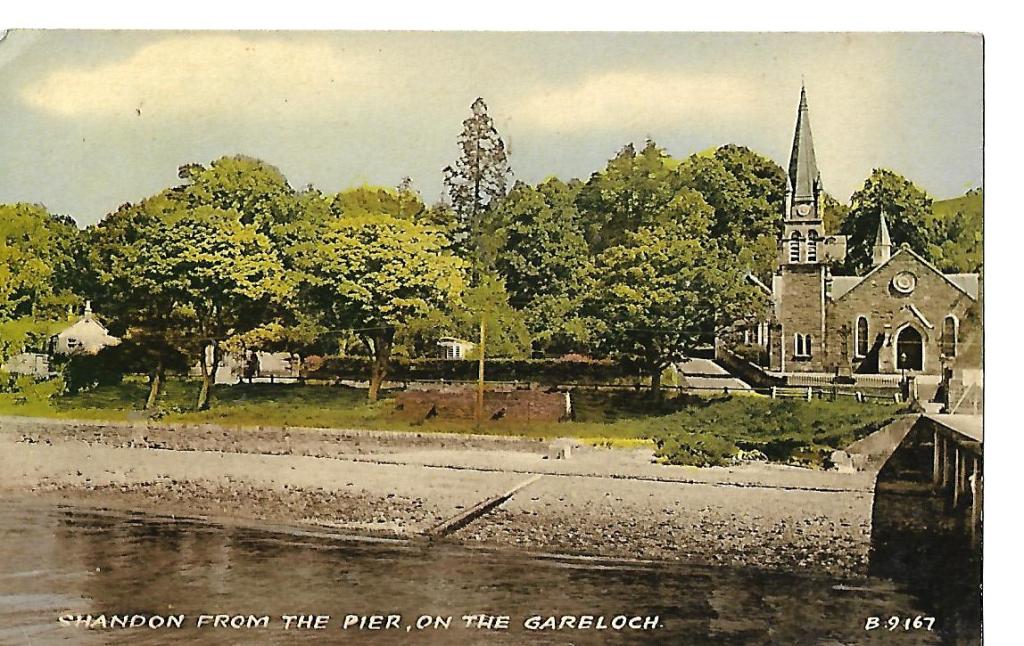
Shandon Church

BIRTHS

The Paisley Herald and Renfrewshire Advertiser, 3rd September 1864.

At the Free Church Manse, Shandon, on the 27th ultimo, the wife of the Rev A M MacCallum, a son.

Dundee Advertiser, 21st October 1865.

At the Free Church Manse, Shandon, on the 18th inst, the wife of the Rev A M MacCallum, of a son.

(See Margaret McCallum’s death entry below).

The Evening Telegraph, 11th October 1888.

At West Shandon, Gareloch, Dunbartonshire, on the 10th inst, Mrs Charles Neaves, of a daughter.

MARRIAGES

The Fife Herald, and Kinross, Strathearn, and Clackmannan Advertiser, 26th June 1851.

At Helensburgh, on the 13th inst, Walter Buchanan, Esq, of Shandon, to Christina Laura, eldest daughter of James Smith, Esq, of Jordanhill.

(Also see Christina’s death in the section below).

The Inverness Courier, 5th February 1852.

At West Shandon, Dumbartonshire, on the 28th ult, A Hastie, Esq, MP for the city of Glasgow, to Anne, eldest daughter of Robert Napier, Esq, engineer, Glasgow.

Dundee Advertiser, 9th October 1863.

At the Free Church Manse, Pitcairngreen, on the 6th inst, by the Rev Dr Grierson, Errol, the Rev A M McCallum, minister of the Free Church, Shandon, to Margaret, second daughter of the Rev J W Thomson, Pitcairngreen (no cards).

(See Margaret McCallum’s death entry below).

The Southern Reporter, 1st December 1892.

At Oswald Bank, Partick, on the 16th ult, by the Rev Dr Hunter, Donald, son of James Donaldson, Argair [Ardgare] Lodge, Shandon, Dumbartonshire, to Annie, eldest daughter of William Armstrong, Glengaber, Yarrow.

The Evening Telegraph, 26th July 1895.

At St Giles’ Cathedral, Edinburgh, on the 15th inst, by the Rev J M Webster, MA, Row parish, assisted by the Rev Robert Stevenson, BA Cantab (cousin of the bridegroom), Gargunnock parish, and the Rev Thomas White, MA, Canongate parish, William Mitchell Miller, BSc, mining and civil engineer, Edinburgh, to Jenny, elder daughter of William Wallace, Croy, Shandon.

The Dundee Courier, 13th May 1899.

McNeill – Thom. At St Paul’s Episcopal Church, Loch Street, Aberdeen, on the 12th inst, by the Rev E E Marshall, MA, Thomas McNeill, head gardener, Summerhill, Shandon, Dumbartonshire, to Georgina, eldest daughter of G Thom, foreman boilermaker, G N of S Railway, Aberdeen.

The Courier, 19th March 1909.

Lyon – Scott. At 7 Laverockbank Terrace, Edinburgh, on the 17th inst, by the Rev T Crerar, MA, Thomas Anderson Lyon, stationmaster, Shandon, to Agnes (Nan), youngest daughter of the late William Scott, St Boswells.

The Courier and Advertiser, 23rd May 1945.

Inglis – Fullarton. At the Royal British Hotel, Perth, on May 21 1945, by the Rev A D Alexander, MA BD, Ian, second son of Mr and Mrs J Inglis, Ardgare Cottage, Shandon, Dumbartonshire (late of Taynuilt), to Sadie Margaret, youngest daughter of Mr and Mrs J R Fullarton, Broomlea, Dunkeld Road, Perth.

DEATHS

Dundee, Perth and Cupar Advertiser, 7th May 1852.

At Glasgow, on the 30th ultimo, Christina Laura, wife of Walter Buchanan, Esq, of Shandon, and eldest daughter of James Smith, Esq, of Jordanhill.

The Dundee Courier and Argus, 26th June 1876.

On the 23rd inst, at West Shandon, Dunbartonshire, Robert Napier, in the 86th year of his age.

The Dundee Courier and Argus, 25th September 1886.

At North Shore, Auckland, New Zealand, on the 4th August, in the 51st year of her age, Margaret Thomson, wife of Rev A Murray McCallum, formerly of Shandon, and daughter of Rev J W Thomson, Pitcairngreen.

The Dundee Courier, 3rd March 1894.

Swan. At Ardchapel, Shandon, on the 1st inst, William Swan, LLD, Emeritus Professor of Natural Philosophy in the University of St Andrews, aged 76.

Edinburgh Evening News, 12th August 1896.

At Scone, New South Wales, Australia, on 30th July, George Lyon, eldest son of the late William James Walker, of Garemount, Shandon, Dunbartonshire.

The Dundee Courier, 29th June 1899.

Miller. At Shandon, on the 27th June, James Miller (of Wm McLaren, Sons & Co, Limited, and 21 Woodside Place, Glasgow), in his 81st year.

The Evening Post, 10th July 1900.

Kirkpatrick. At Lagbuie, Shandon, Dunbartonshire, on the 9th inst, Andrew J Kirkpatrick, of 5 Park Terrace, Glasgow.

The Evening Post, 7th March 1902.

Dick. At Shandon, on the 5th inst, Bessie Murray, eldest daughter of the late William Dick, and of Mrs Dick, 16 Hamilton Park Terrace, Hillhead, Glasgow.

The Courier and Advertiser, 13th August 1951.

Bruce. At Perth Royal Infirmary, on August 11th 1951, Andrew Bruce, late of Linnburn Lodge, Shandon, Dunbartonshire, beloved husband of the late Elizabeth Blyth. Friends wishing to attend kindly meet cortege at Faslane Cemetery at 2pm.
Public breakdown of a Shandon marriage

THE SCOTSMAN, SATURDAY 20 JULY 1940

UNHAPPY MARRIAGE – WOMAN GOLFER’S ACTION – ALIMENT REFUSED

An action by Mrs Sybil Messum or Fleming, Harrow Lodge, Baldslow, St Leonards-On-Sea, Sussex – runner-up in the West of Scotland Ladies Golf Championship in 1938, and winner of the Renfrewshire County Championship in 1939 – who sued for separation with aliment at the rate of £1500 per annum against her husband, William Young Fleming, Linnburn, Shandon, Helensburgh, was dismissed by Lord Patrick in the Court of Session yesterday. The action, which was defended, was based on the alleged cruelty of the husband.

Lord Patrick said the the pursuer and defender met for the first time about the month of February 1919. They were married on May 20, 1919, after a short engagement. The marriage was unhappy almost from the beginning. The dispositions of the parties were entirely different, and they had no common interests. There was no evidence that there was ever any lasting love or deep affection, at least on the wife’s side, to bind them together, and from an early date her distaste for the physical side of marriage deprived them of that bond and of that medium of reconciliation after differences.

‘ A BONNIE GIRL’

At the date of the marriage she was 22 years old. She was a bonnie girl, of fine physique. She was a fine player of games and much addicted to them. Much of her life had been spent in playing tennis, golf, curling, and bridge. At the date of the marriage he was 33 years old. He was nowhere near her class at the games she played. In fact, he seemed to have had or developed a dislike for the tennis-playing, golfing, bridge-playing type of women who were her friends. His sporting interests were in yachting and shooting, in which she had no interest and took no part. He was passionately interested in his business, at which he worked hard all day.

In the course of a long review of the evidence his Lordship said that the parties had frequent quarrels. Witnesses from the wife’s family placed all the blame on the husband, representing him as a bully and her as never in fault. Witnesses from his family placed the blame on her. She was represented as snubbing him on every possible occasion. In his Lordship’s opinion both were to blame. Neither would yield to the other. His Lordship thought both had tempers which were not always under control. In their quarrels they apparently at times blackguarded each others’ families, which appeared to have rankled a great deal.

‘EMOTIONALLY UPSET’

The pursuer was runner-up in the West of Scotland Ladies’ Golf Championship in 1938, when the defender had, according to her, been ill-treating her for two months, and when certainly she and the defender had been quarrelling for that period, and she won the Renfrewshire County Championship in April 1939, when, according to her, her husband had been persistently cruel to her for eight months.

His Lordship had no doubt that she was emotionally upset by the continual bickering in which she took part at home, and showed that when she spoke of her relations with her husband to her friends and to her doctors, His Lordship could not hold it proved that the conditions of her married life ever seriously impaired the pursuer’s health. In this case the wife had never had cause to fear that her husband would use physical violence towards her. It was a case where the faults of the husband and of the wife contributed to produce a state of embitterment between them which led to their living a life of misery. No doubt the wife suffered in her feelings through this misery, and might have been in better fettle if this condition of affairs which she helped to produce had not existed. This was true also of the husband. The mental misery never had any serious effect on her health. She remained in astonishingly good health, as did he. In this country release from the obligation of matrimony was not yet accorded to a spouse who had contributed materially to the injury of which he or she complained.

Counsel for the Pursuer: Mr L Hill Watson, KC, and Mr W R Milligan. Solicitors: Martin, Milligan and MacDonald, WS, Edinburgh, and Brownlie, Watson & Backett, Glasgow.

Counsel for the Defender: Mr J R Wardlaw Burnet, KC, and Mr A W M M Williamson. Solicitors: J W & J MacKenzie, WS, Edinburgh, and McClure, Naismith, Brodie & Co, Glasgow.

Sale of Linnburn in 1859

GLASGOW HERALD, 4TH APRIL 1859

VILLA ON THE GARELOCH

To be sold, by public roup, within the Faculty Hall, Saint George’s Place, Glasgow, on Wednesday the 20th day of April, 1859, at one o’clock afternoon (if not previously sold by private bargain).

The villa of Linnburn, near Shandon, in the parish of Row and county of Dumbarton, with offices, garden, and pleasure ground.

The house, which was substantially finished under the inspection of the late proprietor, Samuel McCall Esq, about 20 years ago, is in good repair, and contains parlour, dining room, and library, with kitchen and scullery, on the first floor; and five bedrooms, closet, etc on the second floor; but is capable of extension at little expense. The offices contain a coach house and two-stalled stable. An abundant supply of water is conducted into the house.

The grounds extend to about 7 acres, for which a feu duty of only £38 5s 9d is payable, the remainder of the original feu duty having been redeemed.

The site is elevated, with a southern exposure, commanding the views of the loch and surrounding scenery. A considerable stream passes through the grounds, which are beautifully laid out.

The property has an easy access to and from Glasgow by the Helensburgh Railway and by the omnibus, which passes the gate several times daily.

To insure competition, the upset price has been further reduced to £1800.

The furniture in the house could be had at a valuation, and early entry given.

For further particulars, apply to Moncrieff, Paterson, Forbes & Barr, Writers, 45 West George Street, Glasgow.

Muir & Monteith, auctioneers, 29th March, 1859.

Sale of the Shandon collection – part 10

Dear blog reader.

Here is the tenth part of the series on the sale of the contents of Shandon House, also known as the Shandon collection.

This blog post describes Robert Napier’s picture collection and the remains of his library which were sold on the 3rd day of the sale of the contents of Shandon House.

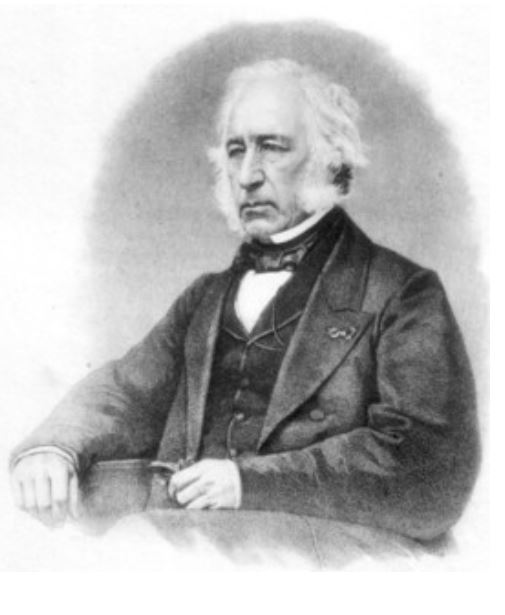
Robert Napier

********************************

THE GLASGOW HERALD, SATURDAY, APRIL 14, 1877

THE SALE OF THE SHANDON COLLECTION

LONDON, FRIDAY

The sale of the pictures began today with those of the French school, of whom Claude, Le Nain and Joseph Vernot were the best represented. In Munilo’s pictures the Shandon gallery is especially rich. Of the 52 Italian pictures, which comprise, amongst others, such names as Coreggio, Raffaelle, Brozzino, Titian, Bonifacio, Leonard da Vinci, Batoresso, Andrea Mategna, and Sasso Ferrat, it is almost impossible to speak without having the history of each canvas. The art frauds of all three centuries have been persistent, and baffle all but the most acute connoisseurs, and sometimes even them. Speaking hastily, one would be inclined to doubt the authenticity of more than one of the works attributed t some of the above-mentioned painters, but no-one could deny the extreme beauty of some and the genuineness of others. There is, for example, a head of the Magdalen in prayer, by Guido, on copper, which is full of grace; and a Diana bathing, painted by Ludovico Caracci, full of life and vigour, though evidently only painted no the spur of the moment, and without any intention of making it a finished picture. Of the two Raffaelle’s, that from Sir R Strange’s collection, representing a Virgin in a red dress holding the infant in her arms, has more of the Raffaelle touch than the other, but neither is a very important specimen of this great master. The Dutch pictures are numerous, and for the most part excellent. Nicolas Maes, Jan Steen, Peter De Hooge, Ostade and Teniers, are strongly represented by admirable specimens. Amongst the landscape painters of the same school there are good pictures by N Bergheim, Both, Van de Velde, Ruysdael and Wouvermans, and of both Van Dyck and Rembrandt there are specimens in their best style. The portrait by the latter of the Burgomeister Six, from Lord Northwick’s collection, is as fine a picture of the sort as exists in our National Gallery. Of the British pictures (none of which were sold today) there is a portrait of Burns by A Nasmyth, presented by the poet to W Tytler with the well known lines:

I send you a trifle – the head of a bard
A trifle scarce worthy your care
Accept it, dear Sir, as a mark of respect
Sincere as a Saint’s dying prayer.

There are twp portraits by Hogarth – one of Garrick, and the other of the artist’s wife, which latter is an admirable and rare specimen of Hogarth’s power of portrait painting. Sir David Wilkie is represented by three portraits – his own, painted for Miss Barnard (which ought to be secured for the National Gallery), his mother’s and that of General Palafox, the defender of Saragoza. A Cottage Girl Hanging Out Clothes, by Stothard, is an admirable example of this delicate painter, whose work, after a long period of neglect, is now beginning to be appreciated. Of George Morland there are three specimens, one his own portrait; of Sir Joshua Reynolds, two; and of J Napier, two; both portraits taken at Shandon, one being of David Roberts, RA, and the other of Sir George Harvey, PRSA. That Mr Napier was always ready to patronise national art when it deserved it may be seen in the numerous works by Brown, Cawse, Macnee, MacCulloch, and others.

The following are some of the prices obtained today:- Claude, a seaport town in the Levant (837) 41 gs; Murillo, Spanish peasant boys (366) 22 gs; Murillo, Spanish peasant boys (367) 17gs; Murillo, the Virgin of the Immaculate Conception, with infant angels (359) 76 gs; Murillo, the Virgin as the good shepherdess (370) 60 gs; C Dolci, Santa Christians destroying Heridoia (379) 72 gs; Guido, head of the Magdalen in prayer, on copper (281) 30 gs; Tintoretto, portrait of a Venetia nobleman in the character of David, the body of Goliath, and the Philistine in flight in the background (400) 32 gs; Palma Vichio, the adoration of the shepherds, a brilliantly coloured Venetian picture, on panel (600) 160 guineas; S Contarni, the Saviour represented as a child of about eight years old standing on the globe holding the cross in his hand (405) 100 gs; Raffaelle, the Holy Family with St Elizabeth and St John (407) 60 gs; Raffaelle, the Virgin in a red dress holding the infant Saviour in her arms, the head of the infant St John is in the background (40) 58 gs; L da Vinci, the Virgin and child (409) 62 gs; Guardi,a pair of views of Venice (417) 96 gs; Ommeganck, a mountainous landscape (431) 41 gs; Moucheron, a grand classical landscape with figures (440) 65 gs; N Bergheim, the ford (448) 85 gs; A Both, a group of 14 peasants at a wine stall in the Forum of Rome (453) 82 gs; Van Dyck, the Virgin and Child and a female saint (460) 31 gs; J Van Huysum, a vase with a bouquet of flowers upon a marble dish, upon which is lying a group of fruit (462) 320 gs; J Van Os, an elaborate group of fruits and flowers at the foot of a sculptured vase (460) 84 gs; J Weinix, a group of three children on a garden terrace (465) 35 gs; W Van De Velde, a rocky coast scene with vessels in a storm (468) 7 gs; Rembrandt, head of a young man (470) 33 gs; Rembrandt, portrait of the Burgomaster Six in a black dress with ruff and slouched hat (471) 101 gs; Rembrandt, portrait of a lady in a ruff (472) 100 gs; P De Hooge, interior of a room, 100 gs; F De Hooge, a Flemish interior (476) 103 gs; A Pynacker, a river scene, with travellers and mules crossing a bridge (480) 165 gs; Jacob Ruysdael, a landscape at the edge of a forest (482) 62 gs; Jacob Ruysdael, bleaching grounds, near Harlem (483) 125 gs; A Van De Velde, a Dutch water scene with a frozen river, buildings and figures (485); J Wynauts, a landscape with a farmyard surrounded by trees (486) 51 gs; P Wauvermans, a mountainous landscape with a staghound (490) 90 gs; P Wauvermans, the halt at the gypsy’s camp, a composition of numerous figures (487) 100 gs; Van Musscher, an interior of a room with a lady seated near a window (498) 68 gs; G Vander Eeckhout, a group of 4 portraits of children playing with a goat (500), 400 gs.

The total amount realised by the day’s sale was 5269 guineas. Many of the pictures went for very small sums, their genuineness not being beyond question. Mr Caluaghi was the principal buyer.

The sale in Glasgow of the Shandon Library, conducted by Mr Keith, of Duncan, Keith & Buchanan, was completed yesterday, and seemingly with undiminished interest on the part of the public. Thought the lots were neither so numerous nor as valuable as on the preceding days, yet some of them possessed considerable interest as belonging to the great engineer of the Clyde – particularly his copy of Muirhead’s Inventions of James Watt, with Arago’s Historical Eloge and Williamson’s Memorials, 6 vols, morocco, which realised £14 10s. We append a few of the more interesting lots – viz, Stirling’s Annals of the Artists of Spain, 3 vols, £17; Strickland’s Lives of the Queens of England and Scotland, £7 5s; Turner’s Annual Tour, 3 vols, £6 10s; Tyndale’s New Testament, reproduced in facsimile, £4 5s; Walpole’s Anecdotes of Painting, 5 vols, £7 15s; Walton’s Lives and Compleat Angler, 2 vols, £6 10s; Swan’s Lakes of Scotland and Views on the Clyde, 2 vols, proofs, very fine copies, £8; Vieset Euvres des Dominiquin et Raphael, 2 vols, £7 5s; National Memorial to the Prince Consort, full morocco, £12 12s, Total amount of sale, £2145 4s 6d.

Sale of the Shandon Collection – part 9

Dear blog reader.

Here is the ninth part of the series on the sale of the contents of Shandon House, also known as the Shandon collection.

This blog post describes the remains of Robert Napier’s porcelain which was sold on the 2nd day of the sale of the contents of Shandon House. 

Robert Napier

******************************************

THE GLASGOW HERALD, SATURDAY, APRIL 14, 1877

THE SALE OF THE SHANDON COLLECTION

LONDON, THURSDAY

The sale today comprised the remaining continental fabrics, Germany being represented by Furstenburg, gera (a rare mark), Ludwigsburg, Dodelstadt and of course by more Dresden; Italy by Ginori (the best of the existing porcelain fabrics in the country), Le Nove, and Venice, which last at some measure resembles our old Chelsea; France by St Cloud and Sevres; Belgium by Tournay; Holland by the Hague; and Austria by Vienna, of which there were abut a score of specimens, some of great value.

The total results of today’s sale show a slight falling off on that of yesterday, being £2638 against £3148, but this was owing rather to the absence of extremely rare specimens than to any slackness in the bidding. Indeed the average of prices was in excess of yesterday. Ninety two lots of Sevres brought £2265, twenty-nine of Dresden £140, twenty two of Vienna £157, two of St Cloud £32 10s, two of Hague £23 14s, three of Tournay £40 10s, and three of Ginori £11 10s. The Sevres articles were of course the great feature of the sale, five pieces similar to Her Majesty the Queen’s service at Windsor Castle bringing the large sum of 831 guineas.

The following are some of the principal sales, and as before we give the catalogue numbers within brackets:- Sevres collection – a seau with two large medallions (346) 280 guineas bought by Mr Goode. A seau of the largest model (347) 250 guineas, bought by Mr Goode. A tazza on foot, painted with subjects from Homer and Ovid, in five medallions o blue ground (343), 150 guineas, bought by Mr Goode. A circular dish similar to the foregoing (344) ??3 guineas, bought by Mr Goode. An ecuelle with landscapes in medallions on turquoise ground, painted by Mutel and dated 1772 (342), 58 guineas, bought by Mr Smith. A circular dish, painted in medallions on blue ground (345), 56 guineas, bought by Mr King. A large cup and saucer, green ground, painted with cupids, dated 1758 (337), 135 guineas, bought by Mr Davis. A large ecuelle, with oval plateau, painted with subjects after Vernet (313), £62. A large ecuelle, with circular plateau, painted with boys in red in medallions (311), £53. A trembleuse cup and saucer, gros bleu, painted with seaports and figures by Morin (325), £15 3s. A tasse a la reize, painted with birds and flowers by Catrice, dated 1758 (339), £30 9s. A tasse a la reine, painted by Merault, sen., dated 1769 (335), £32 11s. A pair of sugar tureens, covers and stands, bleu de Vinceunez, with birds in gold (327), £36 15s. A large ecuelle with circular plateau, with blue interlacings and flowers on white ground (309), £42. An ecuelle with rose de barry border, painted with flowers (333), £29 8s. A square-shaped tray with green ribbons and flowers, dated 1757 (331), £23 1s. A trembleuse cup, cover and saucer, rose de barry, painted with goats and sheep in landscapes (315), £27 6s. A small ecuelle, cover and stand, with chintz pattern on white ground (340), £19 8s 6d. An ecuelle, painted by Merault, sen., dated 1744 (341), £17 17s. A coffee cup and saucer, turquoise oeil de perdriz, with birds in medallions, dated 1765 (319), £15 15s. A teapot and cover, dated 1780, from the Duchess of Gordon’s collection (314), £15. A cabaret, with gros bleu and gold oeil de perdriz border (312), £31 10s. An ecuelle, with oval plateau, painted with boys in red on white ground with oval spots (310), £23 2s; a coffee cup and saucer, gros bleu with children in a medallion (291) £18 18s; ditto with female figure and dog in a medallion, dated 1765 (292), £17 17s; ditto, gros bleu, painted with a lady with a vase in a medallion (293), £27; ditto, with a subject after J Vernet, by Maria, dated 1779 (294), £25; a cup and saucer, green and white, painted with garlands of flowers by Taillander (263), £18 18s; ditto with rose edges painted by Fontaine, dated 1757 (279), £19 8s 6d; a coffee cup and saucer, green ground, painted by Chabry (255), £30; a white trembleuse cup and saucer, painted with the fable of the fox and the crane, by Baudoin and Vavasseur, dated 1777 (257), £15 15s.

Vienna collection:- A cabaret, purple ground, decorated with arabesques in raised gold (244), £25 10s. A plate, painted with a group of persons (242), £17 6s 6d. A cabaret, with classical figures in relief on blue ground (241), £16 16s. A large cup, cover, and saucer, richly gilt, with portrait in brown monochrome.

Venetian collection:- A large oval bowl, with coloured masks in relief, festoons of foliage and other ornaments (£208), £3. Two cups and saucers painted with vases on white ground, gros bleu and gold border (225), £2 10s.

Tournay collection:- A set of table dishes, 30 in number (222), £31 10s. A cup and saucer,with landscapes and figures, in crimson, and richly gilt (224), £3 10s.

St Cloud collection:- A round pot, with cover, and two smaller pieces, with figure subjects and busts in raised gold (220). £28. A white cup, with gilt arabesque figures and birds (221), £4 10s.

Hague collection:- Dark blue and white vase, 21 inches high, painted with landscapes in two gold medallions (212), £19 19s. A bowl and cover, painted with birds (211), £3 15s.

Dresden collection:- A sucrier and cover, painted with figures in medallions on canary ground (182), £23. A service of eight pieces, painted with pastoral subjects (187), £16 10s. A Marcolini ecuelle cover and stand, gros bleu ground, with conversations in medallions in gilt borders (186), £12 1s 6d.

Amongst the other sales were a Furstenberg ewer and cover and small bowl (204), £2; a Ginori bowl and cover, painted with Pompeian subjects (207), £2 15s; a Ludwigsburg hot milk pot and ewer, painted with a battle scene (215), £212; a pair of Madrid vases (217), £3 3s; and a Rudalstadt cup, cover and saucer (219), £2 172 6d.

Search for two in Gareloch

ABERDEEN PRESS AND JOURNAL, 18 SEPTEMBER 1964

SCOTS LOCH SEARCH FOR TWO BOATMEN

Screams for help sent a launch racing to where a lonely figure clung to an upturned boat in a Scottish loch yesterday.

And as 42-year-old Mr Charles Watson of Millvaig Drive, Farnhill, Rutherglen, was hauled from the Gareloch half-drowned, he gasped out to his rescuers that his young brother and brother-in-law had disappeared when their dinghy overturned.

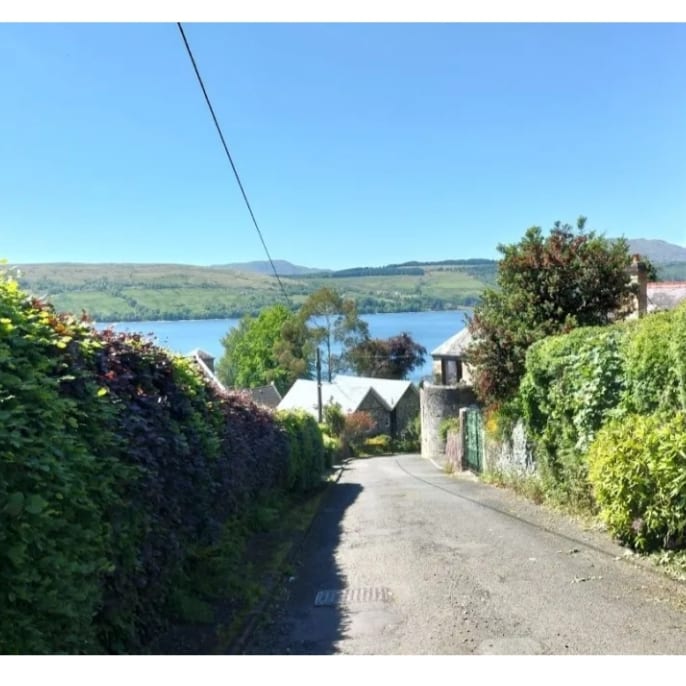
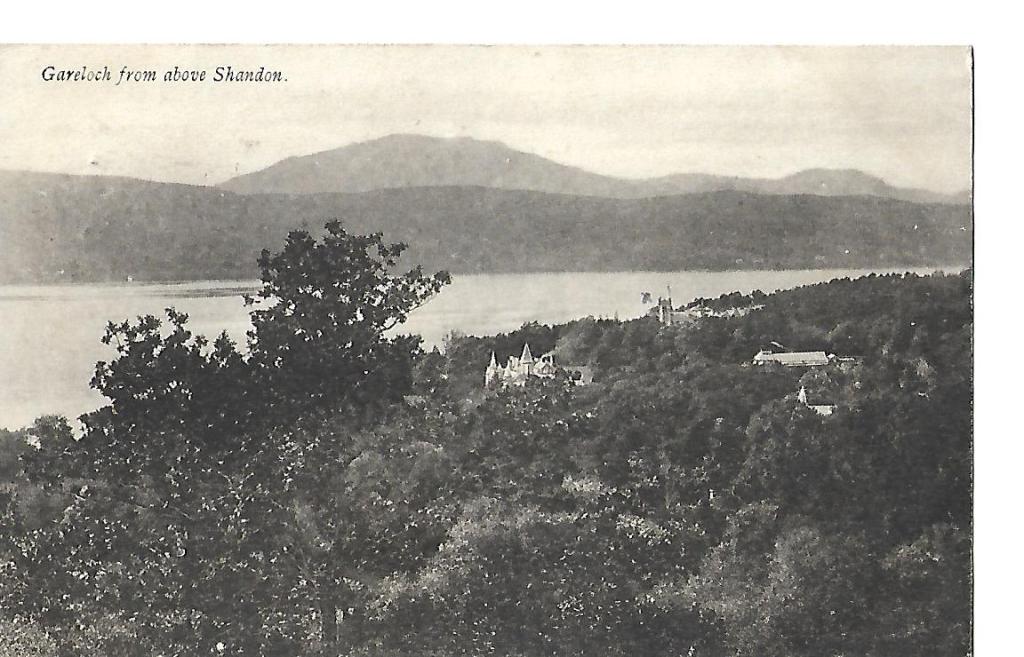
The Gareloch from Kirk Brae, Shandon.

The shouts were heard by workmen working on the new St Andrews Approved School at Shandon and they telephoned the Royal Navy at Faslane two miles away. As a naval launch raced to the spot a civilian launch put out from a local boatyard and made for the upturned craft.

Mr Watson was barely conscious by the time they reached him and was taken by ambulance to the Victoria Infirmary, Helensburgh where last night he was ‘quite comfortable’.

Police and naval craft are searching the area for any sign of the two other men.

Embezzler Found in Shandon

EDINBURGH EVENING NEWS, THURSDAY, AUGUST 1, 1957

BANK TELLER EMBEZZLED £2980 ON WEDDING EVE

A 26 year old bank teller who embezzled £2980 two days before his wedding day went to London for a period of ‘highly riotous existence’, the Procurator Fiscal, Mr Robert MacDonald, said in Glasgow Sheriff Court today.

A month late he was found penniless and dressed like a tramp near his fiancee’s home.

The teller, Ian Kirkton, of Cripps Avenue, Clydebank, was sentenced to 18 months imprisonment after he had pleaded guilty to embezzling £2980 between June 10 and June 13 while acting as a teller at the Wellmeadow branch of the Bank of Scotland.

Mr MacDonald said that Kirkton had planned to be married on June 15. When he did not report for work on June 14 an examination of the cash at the bank disclosed that £2980 was missing. The cash had been extracted in notes from various bundles in the safe.

APPEARED UNAWARE

‘It would appear as if the work had been quite a studious one, because the extraction was such that any official making a rapid check of the cash would be misled’ said Mr MacDonald.

When found in Shandon on July 14, Kirkton appeared to be in a collapsed state, and he professed not to know anything about his previous actions. He appeared to be unaware of the marriage arrangements and that the bank had made arrangements to settle him in a house.

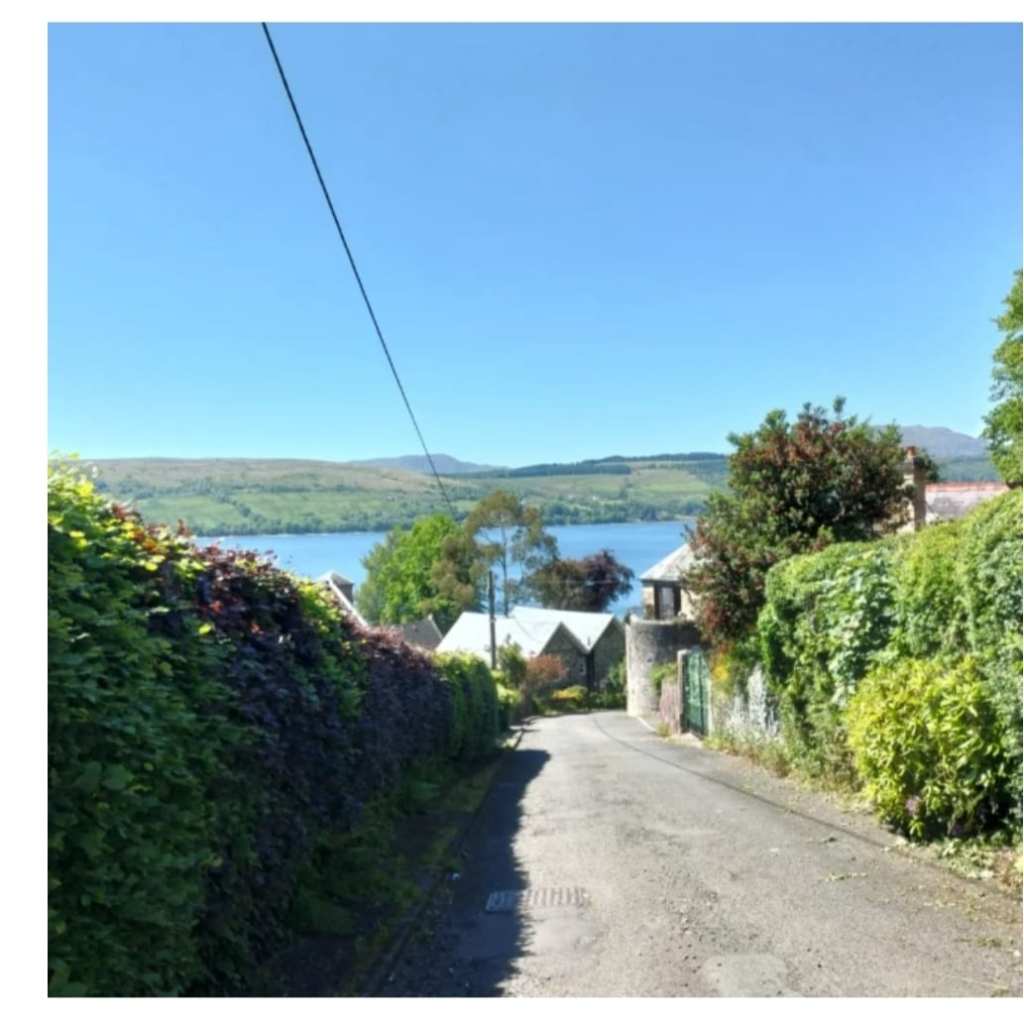
Kirk Brae, Shandon looking onto the Gareloch.

It was discovered that Kirkton had been in London for a period ‘living what can only be described as a highly riotous existence. The ladies who were interviewed there said he left London towards the beginning of July in order to go to Dublin. He seems to have spent some time in Dublin’.

A doctor who examined Kirkton concluded that the amnesia from which he was said to be suffering was bogus.

HANDED DOCUMENT

Mr Robert Martin, defending, said a doctor had found that Kirkton was suffering from hysterical amnesia.

Kirkton’s father had handed Kirkton a document on the night before the embezzlement.

‘I think on the verge of matrimony as he was, while greater men that he might not have been swept over the edge, it contains information that might place him in the state that he found difficulty in facing his fiancee’.

Shandon Valuation Roll 1940

Dear blog reader

Welcome to the twelfth and final part in a series, a list of the people, with house names where known, who were connected with Shandon in 1940.

(Please see a note at the end of this introduction regarding the next series particularly for my blog readers looking for their ancestors in Shandon.)

In 1940 Shandon had 88 households listed, a very small increase compared to the 87 households in 1935.

This compares with: In 1935 Shandon had 87 households listed, an increase compared to the 79 households in 1930. In 1930 Shandon had 79 households listed, a slight increase compared to 1925. In 1925 Shandon had 73 households listed, a slight decrease on 1920. In 1920 Shandon had 76 households listed, a very slight increase on 1915. In 1915 Shandon had 75 households listed, a slight decrease on 1905. In 1905 Shandon had 82 households listed which was a vast increase on the anomaly of the valuation roll of 1895 when  only 16 households were listed but also an increase on the number of households in the 1885 Shandon valuation roll.   In 1885 Shandon had 74 households, a huge increase from 1875 when Shandon had 32 households. The 1875 number was the exact same number as the 32 households in 1865 which had been a growth of 4 households from the 28 households in 1855.

Hopefully those of you with ancestors from Shandon will find this list useful.

I have now reached the end of my series on the valuation rolls for Shandon. My next series particularly for those people searching for their ancestors in Shandon, published every 6 weeks or so, will be the censuses for Shandon from 1841 through to 1911 (or even 1921 if the National Records of Scotland publishes the 1921 census within the time of writing of my census series) blogged as 2 or 3 pages of the original census returns at a go.

***************************************

Shandon Church

Gladys Gray Adams, Balernock
Robert D Allan, Ardgare Cottage
Edward Ballantyne, Bashley Lodge
Reverend George Bennett, Manse
Mrs Beverley, Woodbank Place
Ian Hervey Stuart, Croy
William G Brazier, Croy
Charles H Bridge, bungalow, White House
Charles H Bridge, wooden house, Blairvaddich
Andrew Brodie, Hillhead House
Jack Cairns, West Shandon
F Carney
David Carswell, Shandon House
Thomas Cornwall, north lodge, Shandon House
Mrs Helen Craig, Woodbank Place
Mrs Helen Craig, Woodbank Cottage
Marion Crawford, Oakbank
Mrs Duffie, east cottage, West Shandon
David Duggan, Woodbank Place
Alexander Easton, West Shandon
Thomas Elliot, 6 1/2 mile post house, Shandon Station
A J Ferguson, Vista, Balernock
William Y Fleming, Linnburn
Alexander H Fletcher, Lagbuie
Edwin O Fulton, Letrualt
Mrs Margaret Isabel Walker Gibb, Cragmhor
J Gow, Blairvadach Lodge
John D Gray, Faslane Bay
Thomas Grieve, 6 1/2 mile post house, Shandon Station
William Grieve, Shandon House
Robert Haggart, Glenfeulan Lodge
Robert Haliburton, Balernock Cottage
John F Henderson, Glenfeulan
A Henderson, Ardchapel Lodge
Robert Hill, Lagbuie
Lieutenant Eric Scott Hobson, Inverallt
Barclay Hogarth, Croy
Lieutenant Duncan Charles Home, Berriedale
William Houston, Hillhead House
George Hughes, Eda Yarrow Cottage
George Hunt,West Shandon
John Hutcheson
Colonel Henry B Jordon, Bashley
Colonel Henry B Jordon, Woodside Cottage
Archibald H Kedey, Altnacoille
Hugh Kerr, Greenfield Farm
Alexander Kerr, Letrualt
Hubert V KIrkpatrick, Lagbuie
John Crawford Knox, Oakbank
Hugh R Lindsay, wooden bungalow
Mrs W MacAdam, bungalow, Homelands
Mrs MacDougall, the Gables
R MacEwen, Inveralt Cottage
Parlan MacFarlan, Faslane farm
James MacGibbon, Low Balernock
John MacGibbon, golf course
Peter Machray, Agnes Millar Wilson house
Colin M MacKellar, Eda Yarrow Lodge
Miss E MacKenzie, Woodbank Place
Margaret C MacKinlay, Hillhead House
Margaret C MacKinlay, Woodburn cottage
Margaret MacLean, south lodge, West Shandon
George H Torquil MacLeod, Fuinary
Niven MacNair, Glenfeulan Cottage
William Marshall, Hillhead House
D Martin, Blarvaddich
J Mauchlin, Hill Cottage, West Shandon
Mrs Mary Mitchell, widow, bungalow, Carn Moss
Nelson Mitchell, Shandon House
Bruce Morrison, wooden bungalow
Edward L F Mucklow, Ardchapel
Miss M J W Muir, West Shandon
Alexander Pottie, the Gable
John Rankine, wooden bungalow
Doctor T F B Reid, Fuinary
Mrs Ellen D S Riddell, Chapelburn
Mrs Ellen D Riddell, workshop and store
John Rodger, Croy
D Ross, Shandon House
Robert Ross, the Gables
William Scobie, 6 3/4 mile post house, Shandon Station
Henry Scobie, Ardgare lodge
Ronald G Sillars, Stuckenduff
Ronald G Sillars, Ardgare
Charles Stewart, Letrualt
William Strang, south lodge, Shandon House
Thomas Studders, Hillhead House
James Todd, Blairvaddich House
James Walker
William Williamson, Fuinary
J Wilson, Woodside Cottage
[No first name given] Winton, north lodge, West Shandon


DEATH OF JOHN MACFARLAN

DUNDEE EVENING TELEGRAPH, TUESDAY, OCTOBER 23, 1900

DEATH OF A WELL-KNOWN CATTLE BREEDER

Mr John MacFarlan, JP, Faslane, Gareloch, died yesterday morning at the age of 92.  He was confined to bed for only a few days, and the more immediate cause of death was failure of the heart’s action.

The Gareloch from Kirk Brae, Shandon

His grandfather owned property in Glenfruin, and became tenant of Faslane, which has now been in possession of the family for four generations.  As a sheep farmer and breeder of cattle Mr MacFarlan had a wide reputation.  He was a judge at the first Paris Exhibition in 1851, and has frequently acted in the same capacity at the Highland Society and other shows.

A man of sound judgement, prudence, and integrity, he was often employed as a valuator of sheep and land.  In local affairs he took a deep and intelligent interest.  He was a member of the first school board, and in the early days of parochial boards he proved himself a useful representative.

Mr MacFarlan was in many respects a remarkable man, and was most deservedly esteemed throughout the county of Dumbarton.

Ordination At Shandon

GLASGOW MORNING JOURNAL, WEDNESDAY, JULY 23, 1862

ORDINATION AT SHANDON

On Thursday last the Free Presbytery of Dumbarton met in the Church, at Shandon, for the purpose of ordaining the Rev A Murray McCallum, who had been the unanimous choice of the people, as pastor of that Church.

Shandon Church

The Rev Mr Tait, of Dumbarton, moderator of the Presbytery, preached and presided. On Sabbath last, Mr McCallum was introduced at Shandon by the Rev John W Thomson, of Pitcairngreen, who preached in the forenoon an excellent discourse from Exodus iii 1, and Mr McCallum preached in the afternoon from 2nd Timothy, iv 6.

The Church was crowded, and, from the character of Mr McCallum, and the manner in which he has been received, there is every reason to believe that, by the blessing of God, his ministry will prove both and acceptable and profitable one.