Shandon in March 1879

Dear blog reader, this is the second part in the series looking at what was the focus in Shandon in a particular week in time. In the second week of March in 1879 the focus in Shandon was the availability of the Helensburgh News and the alterations made at the Hydropathic Hotel

Helensburgh News 13 March 1879

Shandon

To our readers – To suit the convenience of the public in this district, it has been arranged that in the future the News will be on sale on the morning of publication at Mr Vallance’s, Quayhead.

Hydropathic Establishment

Since our last notice of this establishment the additions are nearly completed, the extent of which nearly occupy half an acre, and are in conformity with the baronial style of architecture for which Shandon House has so long been famed. In the new building there are 95 bedrooms in two flats, with baths adjoining, fitted up in the very best style, the furnishing and carpeting being of the newest design, supplied by Messrs Wylie & Lochhead and Messrs Cree & Co, Glasgow. On the ground a floor a magnificent dining room, where upwards of 900 can sit down at once, has been fitted up, and a door on the left-hand corner leads into a tasteful and properly ventilated recreation-room. An extensive corridor, leading from the recreation-room into the conservatory, is also being elegantly fitted up. The culinary arrangements are almost complete, the kitchen and range containing all the recent improvements, and in close continuity with the dining-room there is a service-room, where victuals can be served up in the best of order without a moment’s delay.

We do not at all intend this as a proper description either of he internal arrangements of the external improvements, but before the grand opening, which is expected to take place early in May, we hope to be able to state more fully and with greater authenticity the real dimensions and capabilities of what is sure to prove one of the most, if not the most attractive establishments of the kind in Scotland.

In addition to spacious dining and drawing-rooms, ladies’ drawing-room, recreation-room, billiard-rooms, and the suite of bedrooms referred to above, not to speak of the outdoor pleasure to be enjoyed, the establishment may be considered all that could be desired. The baths are elegant, and could not be surpassed in the kingdom, everything possible being done to make them complete. The swimming bath, capable of holding 6000 gallons of salt water, is particularly worthy of notice, and of itself should prove a great acquisition, and, no doubt, when once in operation, will be largely patronised by local ladies and gentlemen, as well as those residing for a time in the establishment. This bath can be heated by steam to any tolerable degree of temperature, and is fitted with trapez for gymnastic exercise. We think the company may consider themselves fortunate in securing such an energetic person as Mr Mackenzie as manager, and we are sure that his courtesy and gentlemanly deportment will secure for him the respect and esteem of all who may find it convenient to locate themselves under his care.
Death at Ardgare

Strathearn Herald, 30th December 1911

ESTATE FALLS TO THE UNITED FREE CHURCH

Miss Kerr, the last member of a well-known family, died at her residence, Ardgare, Shandon, on Wednesday night, at the age of 85. Her father, an Ayrshire man made a fortune as a tobacco merchant in Virginia and on his return to Scotland purchased the estate of Robertland, near Stewarton, in Ayrshire.

Miss Kerr maintained the best traditions of the family for liberality, her benefactions to Church and philanthropic scales being on a large scale, while she was a generous contributor to all local charities. She will be missed especially by Shandon United Free Church, of which she was a member.

In terms of her late brother’s will the United Free Church of Scotland will benefit to a very large extent, Miss Kerr only having the life-rent of the family estates, which, it is understood, now go to the Church.

Shandon in July 1884

Dear blog reader,

Welcome to part 1 of an occasional series focusing on what happened in Shandon in a particular week in the past.

This week, let’s explore what happened in Shandon in the last week of July 1884.

Helensburgh News 31st July 1884

Shandon

The Regatta

After a good deal of bantering between the Garelochhead and our local Regatta Committees as to the propriety of the two events being amalgamated into one, and no definite arrangement having been come to, it has now been arranged that the Shandon Regatta will take place on Saturday week, and announcement has been made to that effect, James Bell, Esq., Summerhill, being appointed commodore. The events number in all 13, including sailing and pulling races (confined and open), a race for the Cumberland boys, punt race, etc, and from the number of entries already made, the different events are likely to be keenly contested.

Excursion

The children attending the Sir Michael Street United Presbyterian Church Sabbath School, Greenock, accompanied by several of their friends and teachers, to the number of about 300, had their usual summer treat on Tuesday, which took the form of a trip to Shandon. There were several slight showers during the day, which damped the ground a little but not the spirits of our youthful friends. On their arrival at Shandon, the young folks were treated to a plentiful supply of bread and milk, after which races and games were engaged in. A sack race, for which four boys entered, was won by William Aitken. Quite a feature of the day’s entertainment was a wild flower bouquet competition, for which there were seven prizes. Between forty and fifty engaged in the contest, and the two ladies who acted as judges had a task of no small difficulty in awarding the prizes. The first prize was gained by Annie McDonald, the second by Sarah Strathers, while Annie Crawford and Johanna McNab were equal for the third prize. The party were much indebted to Mr and Mrs McLachlan, who kindly gave the use of their fields. The young people arrived safe home about seven o’clock, and were apparently much pleased with their day’s outing.

Near Drowning Opposite Shandon Church

Glasgow Herald 2 August 1884

Narrow escape from drowning in the Gareloch

Yesterday at midday Donald McLeod, 72 years of age, residing in Helensburgh, narrowly escaped being drowned in the Gareloch. McLeod, who is an old soldier, left Helensburgh for Garelochhead about half-past ten in a lug-sail boat belonging to Mr Campbell. All went well until opposite Shandon Church, when McLeod attempted to reef the sail, and while doing so the ballast shifted, causing the boat to capsize, and it sank immediately.

Two of the workmen at the Church and Alex McPhail, coachman, put off in a boat to the rescue. McLeod was floating about, when they reached him, but was nearly exhausted. He was taken ashore and carefully tended at Mrs Bell’s, Summerhill, who provided him with dry clothes. McLeod has saved three persons from drowning during his career as a yachtsman.

Motor accident involving Mr Brown of Summerhill

Dundee Evening Post 9 September 1901

Pathetic Glasgow fatality

A distressing motor fatality has occurred near Bearsden, Glasgow. A little boy named Archie Gillen, aged about 5 years, son of John Gillen, Garscadden, was, along with some other children, running along the road when he got right in front of a motor driven by Mr Albert Brown, Summerhill, Shandon. Mr Brown promptly swerved his car right round so as to avoid an accident, but the splash-board struck the boy on the head and he was knocked down.

Taking the little fellow into his motor, Mr Brown, who was very much distressed at what had occurred, drove him to Bearsden, where Dr Kennedy found that life was extinct. The boy had a leg and arm broken, as well as a fractured skull.

Aldonaig – a fire and an advertisement

The Scotsman 10 July 1899

Fire on Garelochside

Yesterday afternoon the roof of Aldonaig House, situated between Row and Shandon, occupied by Miss Dundas, was discovered to be on fire, and the Helensburgh fire brigade was summoned.

Before the arrival of the brigade, however Mr F C Buchanan and a number of Row people got a hose attached to the water main, and succeeded in getting the fire under, without any great damage being done.

The Scotsman 26 August 1920

House – tablemaid wanted, 3 ladies and 3 maids kept; quiet place’ small house. Apply Mrs Hamilton Dundas, Aldonaig, Row, near Helensburgh.

World War 1 and the sons of Reverend Hugh Miller

Daily Record 1 October 1915

Shandon officer killed

It has been officially reported by the War Office that Lieut. Ian M Miller, 2nd Argylls, and younger son of the Rev Hugh Miller, MA, Shandon, UF Church, has been killed in action n Belgium.

Lieut. Miller was educated at Larchfield and Merchiston Castle Schools. He joined Glasgow University in session 1913-14, and was a member of the Officers’ Training Corps. On the outbreak of the war he volunteered for foreign service and was appointed Second-Lieutenant.

While with his regiment at Woolwich he was promoted First Lieutenant and transferred to the second Battalion.

Lieut. Miller, who was in his 21st year, met his death whole leading his men on in an attack on the German trenches. He had been in the trenches since early in January. Mr Miller’s other son is serving as a Second Lieutenant with the Clyde Garrison Artillery.

Western Times 9 October 1916

Lieut. W Douglas Miller, Royal Flying Corps, elder son of Rev Hugh Miller, Shandon, Dumbartonshire, is officially reported missing from October 2nd. Lieut. Miller who is 23, went to France some weeks ago and was flying daily over the German lines.

Daily Record 22 November 1916

Officer’s death

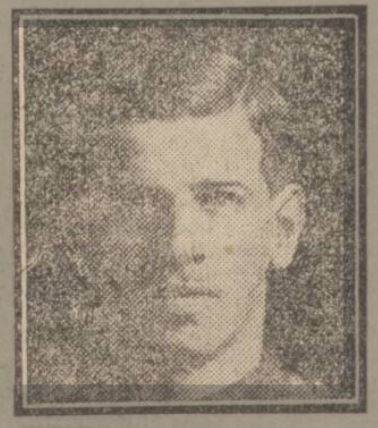
Lieut W Douglas Miller (RGA and RFC), Shandon who has been killed.

Hamilton Advertiser 15 December 1917

There was unveiled on Saturday afternoon in Shandon UF Church a tablet in memory of Lieutenant W Douglas Miller, RGA and RFC, and Lieutenant Ian M MIller, 2nd A and S H, the only sons of the Rev Hugh Miller, MA, minister of the Church.

Both young officers were killed in action. The tablet is the gift of Mr George S MacLellan, uncle of the deceased officers.

Shandon Hydro in Winter

Fife Herald 18 December 1879

Shandon hydropathic establishment unrivalled winter residence.

Sheltered from north and east winds. Extensive private pleasure grounds with large conservatory, vineries, gardens etc. Turkish vapour, salt and fresh water baths, including large swimming bath, heated.

Terms from 55s. Prospectus on application. Address – the manager, West Shandon, by Helensburgh.

Professor William Swan – Ardchapel

William Swan was born in Edinburgh in 1818 to David Swan, an engineer,and Janet Smith. When David Swan died in 1821, William became his mother’s chief focus and Janet Smith was acquainted with Thomas Carlyle the philosopher. William’s maternal uncle was Robert Stevenson, the lighthouse engineer.

William was educated privately in Edinburgh, became a science tutor, taught mathematics and physics in the Free Church Normal School in Edinburgh and taught those same subjects at the Scottish Naval and Military Academy in Edinburgh. He then was appointed Professor of Natural Philosophy at St Andrews University, before retiring due to ill health in 1880.

Professor Swan received honorary degrees from Edinburgh and St Andrews Universities and was a fellow of the Royal Society of Edinburgh.

Professor Swan married Georgina Cullen in 1859 but they had no children.

Georgina died at Ardchapel in 1882:

Fifeshire Journal 13 April 1882

‘At Ardchapel, Dumbartonshire, on the 8th inst., Georgina Frances Downie Cullen, wife of William Swan, LLD, Emeritus Professor in the University of St Andrews’.

Professor Swan died at Ardchapel in 1894:

Dundee Courier 2 March 1894

‘Emeritus Professor Swan who held the Chair of Natural Philosophy in St Andrews University for twenty years, died yesterday after a short illness at his residence, Ardchapel, Shandon, Dunbartonshire’.

Ardchapel was advertised as for sale 2 months later:

The Scotsman 2 May 1894

‘Desirable coast residence for sale.

For sale by public roup, within the Faculty Hall, Saint George’s Place, Glasgow, on Wednesday 9th May 1894, at 2 o’clock afternoon (unless previously disposed of privately), Ardchapel, Shandon, the residence of the late Professor Swan, LLD, beautifully situated on the shores of the Gareloch. The buildings, which are substantial, and in good order, consist of (1) two storey villa, containing 3 public rooms, 5 bedrooms, 2 dressing-rooms, 2 bathrooms (hot and cold water), kitchen, scullery, servants’ room and other accommodation; (2) coachman’s house, 3-stalled stable, 2 coach-houses, harness-room, large hay loft, byre etc and washing-house and laundry (3) entrance lodge containing 2 rooms etc.

The grounds extend to about 5 1/2 acres, well laid out in ornamental plots and garden ground, with conservatory, vineries etc. There are also many valuable trees and shrubs in the gardens. Feu-duty £44. The whole property is in excellent order and forms a most desirable coast residence.

For further particulars and orders to view, apply to R & J M Hill, Brown & Co, Writers, 41 West George Street, Glasgow’.

Professor Swan and Georgina Cullen are buried in Warriston Cemetery in Edinburgh:

John Jamieson of Shandon House

Glasgow Herald 13 October 1871

The late Mr John Jamieson of Shandon

This well-known citizen was buried yesterday in the Necropolis. The funeral services were conducted at his residence on the Gareloch, and it was apparent from the numerous and deeply interested companies of mourners both at Shandon and Glasgow that there are very many in the west of Scotland to whom Mr Jamieson’s removal from us will be matter of sincere regret.

For the last twelve years Mr Jamieson has lived in comparative retirement, but not a few of our readers will recollect the active interest he at one time took in public affairs. He was treasurer to that excellent institution the Royal Infirmary, occupied the Dean of Guild’s chair for two years, and did other important service to the community. His admirable business habits, strict conscientiousness, and general activity, fitted him peculiarly for such public work as he took in hand. His work was always well done, Mr Jamieson was a native of Port Glasgow, and more than one member of his family removed to Glasgow in early life, and rose to mercantile distinction here. He was long a leading partner in the firm of Paterson, Jamieson & Co, and conducted his extensive business transactions with the greatest energy, probity and good faith. What was dishonest or mean he abhorred. His integrity as a merchant was without a spot.

Mr Jamieson was also a true friend, and a very warm-hearted man. A temper that could be hasty and manners that seemed distant did injustice at times to his real character. The mellowing influence, however of advancing years and high principle was very happily apparent in his case, and the thorough kindness of his nature, as well as its sterling worth, will be universally appreciated.

In politics Mr Jamieson was a decided Liberal, and ecclesiastically he was an attached member of the United Presbyterian Church; but he was neither a partisan nor a bigot. He was lover of good men, to whatever party or Church they belonged.

He was spared, in the full possession of his faculties, to see nearly four-score years. The quiet evening of his long life, cheered by the best of all hopes, came at last very gently and peacefully to a close.